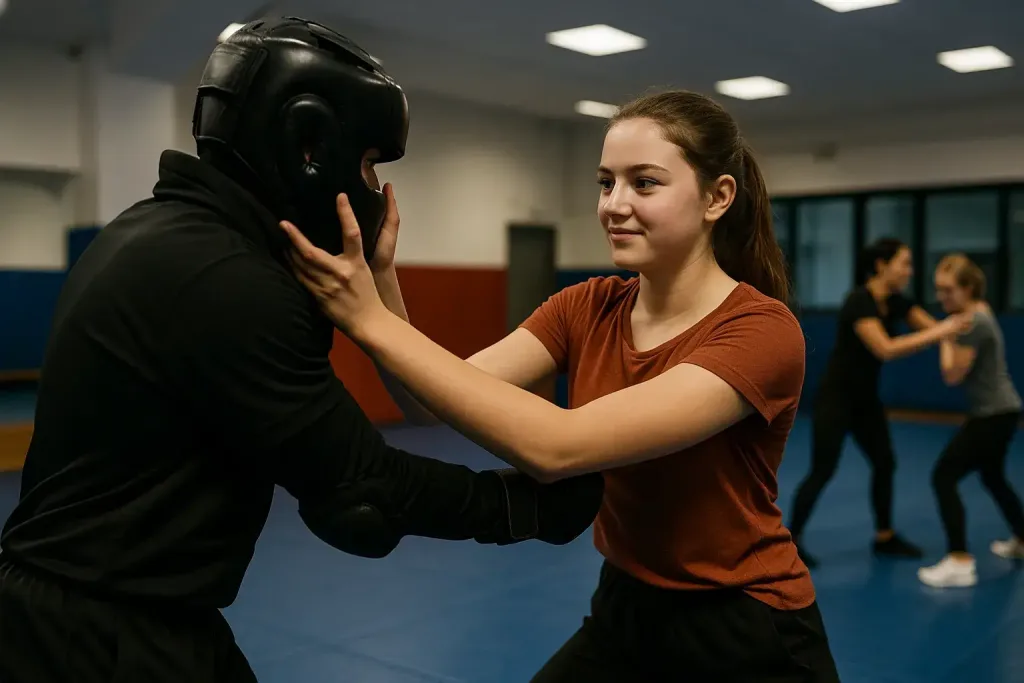
Teaching Personal Safety, Self‑Defense, and First Aid in Moscow: A Practical Guide for Trainers
Why this matters in Moscow
Moscow is a vast, vibrant city—crowded metros, busy streets, late‑night commutes and extreme seasonal weather. Teaching practical personal safety, self‑defense and first aid empowers residents, students and visitors to reduce risk, respond calmly in crises and save lives. As an instructor, you can make neighborhoods, workplaces and campuses safer by providing realistic, lawful and repeatable skills.
Core competencies to teach
— Situational awareness and risk reduction (crowds, transit, isolated routes)
— Verbal de‑escalation and boundary setting
— Simple, lawful physical self‑defense (balance, escapes, using bodyweight—not weapons)
— First aid priorities: threat assessment, CPR/AED, severe bleeding control, choking, fractures, hypothermia/frostbite, burns, shock
— Emergency communication: when and how to call for help in Russia
Legal and safety framing
— Emphasize *lawful* self‑defense: response must be proportionate and necessary. Avoid recommending weapons or illegal activity. Encourage calling police (102) whenever possible.
— Always prioritize safety of the rescuer: use personal protective equipment (gloves, mask) when giving first aid.
— Recommend learners consult local laws or a legal professional for detailed advice.
Emergency numbers and useful Russian phrases
— 112 — unified emergency number (works across Russia)
— 103 — ambulance, 102 — police, 101 — fire
— Useful phrases (Russian):
— “Мне нужна скорая помощь” — I need an ambulance
— “Полиция, пожалуйста” — Police, please
— “Произошёл несчастный случай, нужен врач” — There has been an accident, we need a doctor
Teaching methods that work
— Short theory + long practical: 15–20% lecture, 80–85% hands‑on
— Scenario‑based training: realistic environments (metro carriage, bus stop, stairwell)
— Role play with controlled escalation and safe stopping signals
— Repetition and progressive difficulty; build muscle memory for basic responses
— Use of video debriefs and peer feedback
— Inclusive instruction: adapt for seniors, children, people with disabilities
Sample modular curriculum (for a 3‑hour workshop)
1. Welcome, objectives, legal/safety briefing (15 min)
2. Situational awareness and prevention tactics (20 min)
— Transit etiquette, route planning, using public CCTV zones, phone & bag safety
3. Verbal de‑escalation and boundary setting (20 min)
— Scripts, voice tone, posture, escape cues
4. Self‑defense basics (50 min)
— Break grips, off‑balance escapes, standing up from the ground, basic strikes (targets, control, and when to run)
5. First aid essentials (45 min)
— CPR/AED demo and practice (manikin), severe bleeding control, choking response
6. Scenario drills and debrief (25 min)
7. Q&A, resources, next steps (5 min)
First aid quick reference for trainers (high‑impact points)
— Call 112 first if life is at risk. If another number is preferred, Russian EMS is 103.
— CPR (adult):
— Chest compressions: 30 compressions at 100–120/min, depth ~5–6 cm.
— Ratio 30:2 for single rescuer. Use AED ASAP; follow device prompts.
— Severe bleeding:
— Apply direct pressure, pack wound if needed, elevate if safe.
— Use tourniquet only for life‑threatening limb bleeding and if trained.
— Choking:
— Encourage coughing if conscious. For adults: abdominal thrusts (Heimlich) or back blows; if unconscious, start CPR and check airway.
— Fractures/sprains:
— Immobilize, support, do not realign open fractures; seek professional care.
— Hypothermia/Frostbite (important in Moscow winters):
— Hypothermia: move to warmth, remove wet clothing, insulate, warm core gradually; avoid rapid external heating if severe.
— Frostbite: do not rub; warm affected area in warm water (37–39°C) and get medical help.
— Burns:
— Cool with running water for 20 minutes, cover with sterile dressing, do not apply oily